

Dragon Boat Festival 2026: What It Is and How We’re Celebrating
19th June 26
Every June, the sound of drumbeats rises over rivers and harbours across China, and wherever Chinese communities have put down roots around the world. Dragon Boat Festival, known in Mandarin as Duanwu Jie, is one of China’s oldest and most energetic public holidays, and in 2026 it falls on the 31st of May. Here’s what it’s all about, and how Kensington Wade is marking the occasion.
The Story Behind the Festival
Dragon Boat Festival commemorates the poet and statesman Qu Yuan, who lived in the Warring States period more than two thousand years ago. A loyal minister who was falsely accused and exiled, Qu Yuan drowned himself in the Miluo River on the fifth day of the fifth lunar month rather than witness the fall of his beloved kingdom.
According to legend, local people raced out in boats to try to save him, beating drums to scare away fish and throwing rice dumplings into the river. These acts of devotion became the festival’s two most enduring traditions: dragon boat racing and eating zongzi. The values they embody, loyalty, integrity and standing by one’s principles, are themes our pupils explore in Mandarin lessons and cultural studies throughout the year.
The Dragon Boat Races
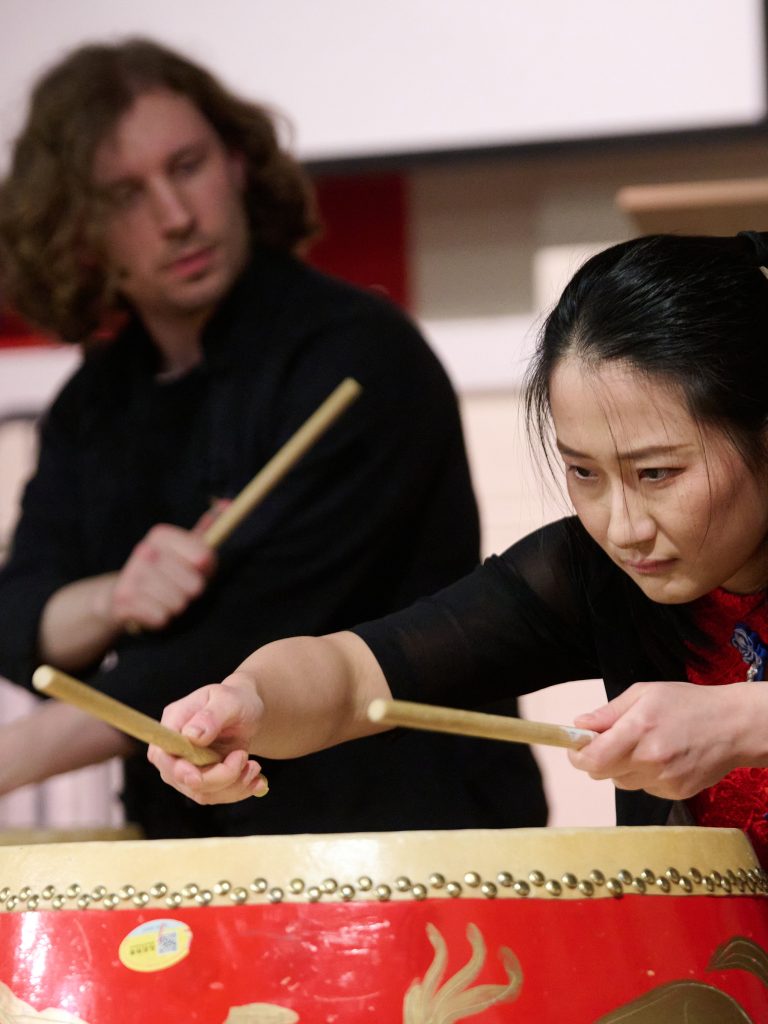
A dragon boat is a long, narrow vessel decorated with a carved dragon’s head at the bow and a tail at the stern. Teams of paddlers row in unison to the beat of a drummer seated at the front. Races are fast, loud and intensely communal. In London, Dragon Boat Festival races take place on the Thames and at several other venues across the city. Attending one is a wonderful half-term activity with a genuine cultural dimension.
Zongzi: The Festival Food
Zongzi are sticky rice dumplings wrapped in bamboo or reed leaves and tied with string, then steamed or boiled. Fillings vary by region: savoury pork and mushroom in the south, sweet red bean paste in the north. Making zongzi is a tradition that brings families together, with the wrapping and tying being a skill passed between generations. Pre-made versions are available in Asian supermarkets if you’d like to introduce your child to the taste.
How Kensington Wade Is Celebrating Dragon Boat Festival 2026
Across the school this week, pupils are exploring the story of Qu Yuan through storytelling and Mandarin vocabulary lessons, learning the names of the key traditions, and discussing the values the festival represents. Older pupils are examining how the festival is marked differently across different regions of China, a rich example of the cultural and contextual thinking that runs through our curriculum.
This kind of grounded, story-led cultural learning is central to school life at Kensington Wade throughout the year, not just at festival time. Our pupils don’t learn Mandarin as vocabulary lists. They learn to understand Chinese culture from the inside, which is what enables real communicative confidence later on.
Find Out More
We share news and photos from our festival celebrations and events throughout the year on our News and Events page. If you’d like to see the school in person, you’re very welcome to book a place at one of our open days.