
A Parent’s Guide to Mid-Autumn Festival: Traditions, Mooncakes and Meaning
25th September 26
Every autumn, when the harvest moon climbs to its fullest and brightest, families across the Chinese-speaking world gather to share mooncakes, light lanterns and gaze at the sky together. Mid-Autumn Festival, known as Zhongqiu Jie, is one of the most important celebrations in the Chinese cultural calendar, and at Kensington Wade it is one of the most anticipated dates in our school year.
If you’re new to the festival, this guide covers where it comes from, what the key traditions mean, and how your family can enjoy a little of it at home.
Where Does Mid-Autumn Festival Come From?
Mid-Autumn Festival falls on the 15th day of the eighth month in the Chinese lunar calendar, the night when the moon is believed to be at its most perfectly round. That roundness is no coincidence: in Chinese culture, a full circle symbolises completeness and reunion, making this a festival above all about family togetherness.
The festival’s origins are thousands of years old, tied to harvest thanksgiving and moon worship. The most beloved story associated with it is that of Chang’e, the Moon Goddess, who drank an elixir of immortality and floated up to the moon to live there forever, watched over by the Jade Rabbit who pounds medicine in a mortar. Our pupils encounter these stories through Mandarin lessons, cultural studies and the school’s own celebrations.
The Key Traditions Explained
Mooncakes are the festival’s most iconic symbol. These dense, round pastries, typically filled with lotus seed paste or red bean and often with a salted egg yolk at the centre representing the moon, are gifted between families and shared after dinner. A beginner-friendly recipe is included below.
Lanterns, traditionally paper and now often LED, are carried by children in the evening. At Kensington Wade, pupils make their own lanterns in art lessons in the lead-up to the celebration. The warm glow of dozens of lanterns held aloft is one of those sights that stays with children long into adulthood.
Moon gazing is perhaps the simplest tradition, and the one easiest to share at home. On the night of the festival, step outside with your child, look up together, and ask them what they see. In Chinese folklore, they might spot the silhouette of Chang’e or the Jade Rabbit.
How Kensington Wade Celebrates
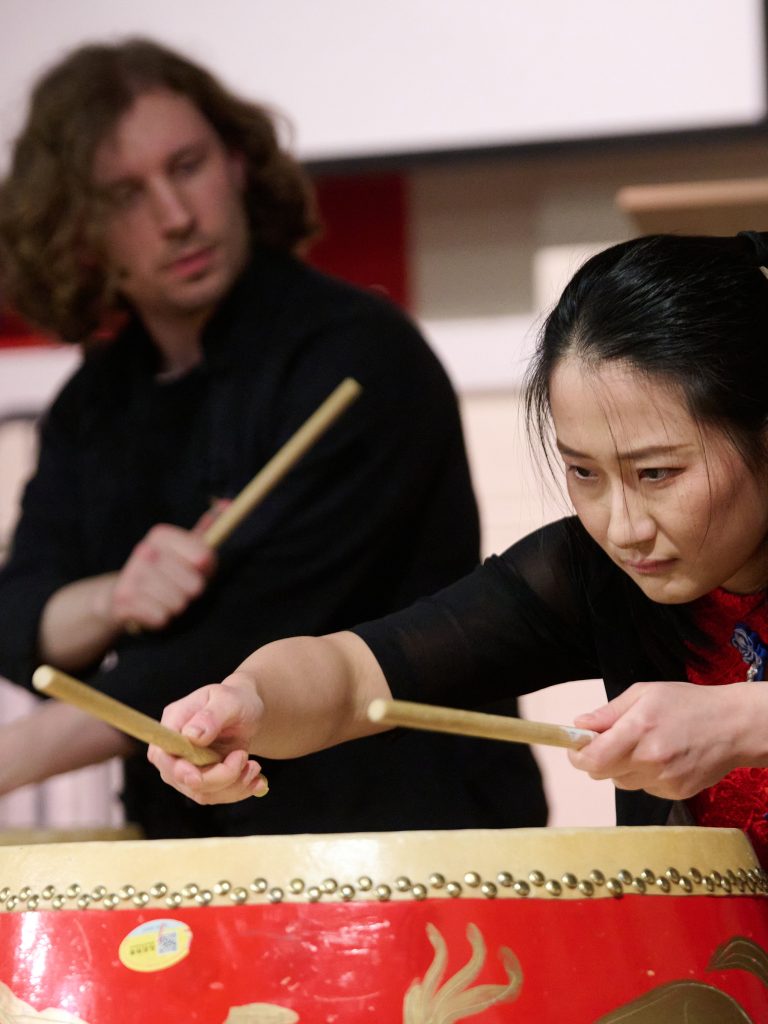
Our Mid-Autumn Festival celebration weaves together music, storytelling, art and food in a way that makes the cultural learning vivid and memorable. Pupils learn the story of Chang’e in Mandarin, practise festival vocabulary, and take part in lantern-making workshops. This kind of lived cultural experience sits at the heart of school life at Kensington Wade, where Chinese culture is not a topic covered in a single lesson but something woven through the whole school year.
Try It at Home: A Simple Mooncake Activity
You don’t need to be an expert baker to bring this tradition home. Here is a simple no-bake version suitable for primary-age children:
- Mix 200g lotus paste (available at most Asian supermarkets) with a little icing sugar until smooth
- Divide into small balls roughly the size of a golf ball
- Press each ball into a mooncake mould if you have one, or shape by hand into a round
- Wrap in cling film and refrigerate for an hour before eating
Make the activity richer by asking your child to tell you the story of Chang’e while you cook together.
Come and See the School in Action
Mid-Autumn Festival is one of many celebrations that bring the Kensington Wade community together throughout the year. If you’d like to experience that community for yourself, you’re very welcome to join us at one of our open events. You can book a place or arrange a personal tour on our Visit the School page.